

For businesses, SEO in 2025 has truly matured: search engines have significantly increased their requirements for website quality, content, and user experience, and algorithm updates have cemented a simple idea: the winners are not those who “spin” keywords, but those who build a systemic product and marketing around demand. Against this backdrop, it’s logical to look ahead: what trends will shape SEO in 2026, and which of them are sure to intensify by 2026, so you can factor them into your budget, team, and KPIs now.
Below is an analysis of these trends from the perspective of a practicing SEO, who measures success not by traffic for the sake of traffic, but by revenue, leads, and market share in search.
1) Technical Optimization: The Foundation Without Which Nothing Will Take Off
No matter what trends emerge, technical SEO remains the foundation. If a website:
- loads slowly,
- crashes on mobile devices,
- returns errors,
- doesn’t open the desired pages to the user,
then no content or links will maintain its ranking.
What to look for in a technical audit:
- fixing critical and fatal errors (Yandex Webmaster, Google Search Console);
- mobile optimization (mobile search is a priority for Google; Yandex’s mobile share is also growing);
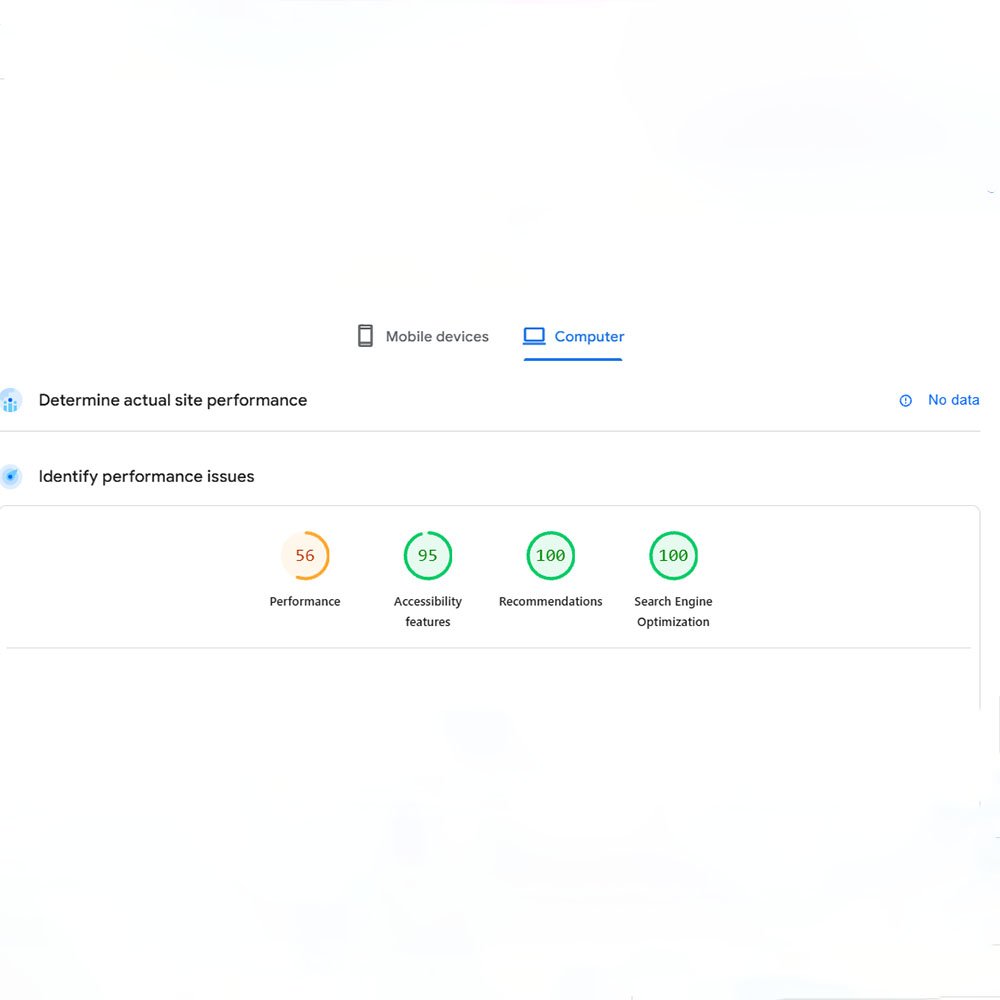
- page loading speed;
- Core Web Vitals: not only speed, but also response to user actions and layout stability;
- server response codes in logs;
- non-existent links, duplicate pages and meta tags;
- robots.txt and sitemap;
- page markup;
- feed transfer to Yandex (especially relevant for e-commerce).
2026 forecast: technical analysis will increasingly be assessed through the prism of UX and conversion. In other words, businesses aren’t interested in abstract scores, but rather in their impact on bounce rate, page views, and leads/orders—and search engines will continue to take this into account.
2) Artificial Intelligence: Not a “text writer,” but an SEO process accelerator
AI in SEO has long been about more than just “generating an article.” For businesses, the value lies elsewhere: speed, predictability, automation of routine tasks, and more accurate decisions.
What strong teams do:
- analyze competitors (structures, clusters, content gaps);
- generate page wireframes/specifications, meta tags, descriptions;
- use AI to forecast: seasonality, trends, competitor activity → how this will affect rankings and demand;
- pre-collect semantics, evaluate the site, link mass, and content quality.
Key business benefit: If you have a rough idea of what users will be searching for in 2-4 weeks, you can prepare your texts/videos/pages in advance and “take a shelf” in search results before your competitors.
2026 Prediction: AI will become the standard for SEO operations (like Excel in finance). Competitive advantage will not come from using AI, but from how you integrate it into the process: quality control, editing, fact-checking, tone control, and intent alignment.
3) Uniqueness and Quality of Content: E-E-A-T as a Mandatory Standard
Search engines are prioritizing uniqueness, expertise, and trustworthiness, especially in information ranking. Verifiable authorship is becoming one of the keys to stable rankings, so the focus is on E-E-A-T criteria:
- Experience — the author’s personal experience (product testing, service receipt, site visit).
- Expertise — the author’s expertise in the topic.
- Authority — the authority of sources and the platform.
- Trustworthiness — the reliability of facts and data.
Algorithms are increasingly assessing the quality of information based on these criteria, so SEO teams will create more in-depth and useful content and properly document authorship.
2026 Prediction: Those who create “content as an asset” will win: authors, editing, evidence (case studies, photos/videos, methodologies), regular updates, and fact checking. For businesses, this means content is not an expense, but a long-term investment, but only if it is produced to quality standards.

4) Voice Search: Conversational Queries and “Response” Content Format
Voice input is growing: assistants, smart speakers, and mobile “on-the-go” scenarios. Characteristics of voice queries:
- long,
- conversational,
- highly specialized,
- personalized.
The trend requires content to be adapted to this style: conversational wording, short answer blocks, inclusion of long queries (both complete and random).
Forecast for 2026: Voice scripts will more strongly connect with local and commercial demand (“near me,” “now,” “where to buy”). This is especially important for companies with an offline presence, delivery, and in-store pickup.
5) Video content optimization: visibility in search results + increased engagement
Video (including short videos) continues to grow: many find it easier to watch than to read. In some niches, video is more effective in demonstrating product benefits. Search engines are increasingly showing video blocks at the top for commercial and informational queries.
Optimizing pages with video results in:
- increased visibility in Yandex and Google,
- increased engagement,
- increased time on page.
Forecast for 2026: video blocks will increasingly “eat away” clicks from traditional articles. It is important for businesses to have visibility Content units for key stages of the funnel: selection → comparison → trust → purchase.
6) Social Media SEO: Search within platforms and presence in search results
Users are increasingly searching within social networks: products, communities, posts, videos, and clips. Plus, search engines are pulling public pages/profiles/posts into search results.
Hence the need for an SEO approach to:
- channel/community names and descriptions,
- post titles and texts,
- videos,
- hashtags.
2026 forecast: For many niches, social media will become a full-fledged “second search engine.” The winner will be the one who synchronizes website semantics and social media content/metadata.

7) “Zero SERPs” and “Zero Clicks”: How to Live When Answers Are Provided Without a Website Referral
Yandex and Google strive to answer user questions directly in the search results: quick answer boxes and generative responses generated by neural networks. The SEO community calls this “zero SERPs” and “zero clicks.”
Important: generative answers are generated based on the search results. To rank high, a site still needs to be at the top. But the risk is obvious: informational websites may lose some traffic because users get help directly from the search results.
2026 Forecast: The share of “zero click” scenarios will increase. Business strategy: shift the focus from “traffic at any cost” to:
- content that leads to action (leads, applications, subscriptions),
- brand strengthening (to make people search for you specifically),
- formats that are harder to condense into a single answer (calculators, comparisons, interactive features, videos, case studies).
8) Semantic Core: From Keyword Lists to Customer Intent
Teams are moving from mechanically collecting keywords to analyzing needs and intent. Tasks:
- Understand how customers actually search for a product/service;
- Expand semantics with synonyms, non-obvious queries, and thematic keywords;
- Consider geography and seasonality in the website structure.
Forecast for 2026: Semantics will increasingly be driven by a “demand map” and funnel: separate clusters for decision-making stages, not simply “all queries into one basket.”
9) SEO for Semantic Search: Meaning is more important than exact match
Semantic search is understanding the meaning of a query and its context, not just the words. Therefore, content should be understandable to algorithms not by a single keyword, but by a network of related concepts. To achieve this, texts are supplemented with:
- LSI keywords,
- industry terms,
- random keywords,
- synonyms,
- cognates,
- different wording,
- different spelling variations.
2026 forecast: the quality of the structure and the completeness of the topic will be more important than the exact match of the keyword. For businesses, this means: one strong page that covers the entire intent is better than ten weak ones.

10) Hyperlocal optimization: neighborhood, “near me,” pickup, and services
Hyperlocal queries (within neighborhood boundaries) are growing, especially for:
- services,
- offline locations,
- pickup/pickup locations.
Voice input is often used in this type of search (“restaurants near me”). Companies that optimize their websites and profiles in geo-services for hyperlocal and voice queries receive regular targeted traffic and conversions. 2026 Prediction: Local SEO will become a must-have for offline businesses. Those who have optimized not only their website but also their geo-profiles, reviews, photos/videos, and data relevance will have a real competitive advantage.
11) UGC Content and Reviews: Focus on Reality, Not “Generated Trust”
Reviews are both SEO and reputation. The focus is shifting toward UGC: real reviews from loyal customers, rather than paid and generated ones. Both users and search engines can recognize them. The value of reviews with photos/videos is growing.
Teams are implementing mechanisms to motivate customers to leave reviews (for example, gamification on marketplaces).
2026 Prediction: Reviews will have a stronger impact on local search results and conversion. For businesses, this is one of the cheapest growth levers: you improve both visibility and trust right from the start.
12) Product-Based SEO: Traffic Isn’t the Goal, Profit Is the Goal
Businesses care about sales and profit, not traffic for the sake of reports. A product-based approach means evaluating each recommendation based on its impact on the company:
- how much traffic and of what quality it will attract,
- how conversion will change,
- how sales will grow,
- how much revenue it will generate.
To make such forecasts, the SEO team must immerse themselves in the business, follow priorities, and justify decisions using business KPIs.
2026 Prediction: SEO will finally become part of product & growth frameworks. Successful teams will speak the language of CAC/LTV, marginality, ROMI, and conversions, not “we improved rankings.”

13) Information Traffic and Brand Media: Content as Part of the User Journey
Blogs on websites continue to grow, but quality requirements are increasing. The greatest advantage belongs to those who combine expertise in the topic and expertise in SEO. Large businesses are transforming blogs into branded media: they’re now part of the customer journey (CJM), not just “articles for traffic.”
Prediction for 2026: Branded media will outperform “SEO articles for the sake of articles,” especially where trust and complex solutions are important.
14) SEO outsourcing and focusing on juniors: the labor market dictates the model
Companies are increasingly outsourcing SEO. Even with an in-house team, they hire agencies for:
- idea generation,
- hypothesis testing,
- scaling,
- routine tasks.
The reason is simple: the demand for SEO is growing, and there’s a shortage of experienced specialists. Agencies are meeting this need through technology, rapid scalability, and training.
At the same time, large teams are relying on junior specialists: motivated newcomers quickly gain experience if there’s a training and mentoring system.
Forecast for 2026: a hybrid model (in-house + agency/contractors) will become the norm. Winners will be those who can manage the process and quality, rather than simply “outsource.”
Conclusions for Business
- SEO trends in 2026 are an evolution of what began in 2024–2025: quality, meaning, user experience, trust.
- Algorithms are becoming more demanding of the quality of websites, businesses, and content, so “gray life hacks” are becoming less effective.
- Generative responses, AI content, and voice searches are having a greater impact on search engine optimization—and this impact will increase by 2026.
- Classic SEO (technical optimization) remains essential: without it, growth is unsustainable.